

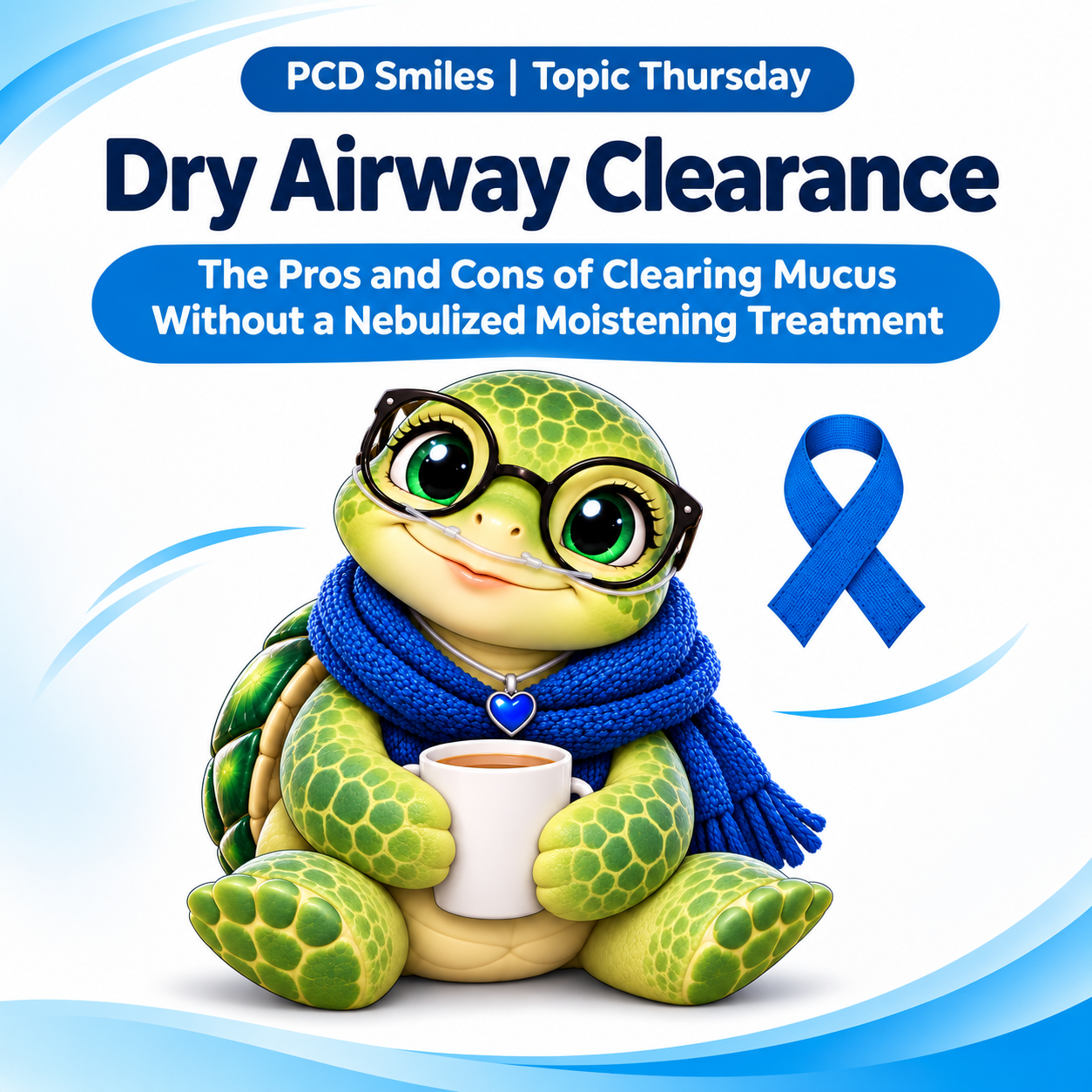

Airway clearance can be performed without using nebulized saline during the session. For some people, this approach may be practical, comfortable, and effective; for others, mucus is difficult to move without an additional treatment. The best routine depends on
the individual, the technique, and the guidance of their respiratory care team.
Airway clearance is an important part of life for many people with primary ciliary dyskinesia (PCD). It can also be recommended for people with bronchiectasis, cystic fibrosis, and other conditions that make mucus difficult to clear.
Some airway clearance routines include a nebulized solution, such as saline. Others use breathing techniques, physical movements, manual assistance, or devices without a nebulized moistening treatment at the same time. You may hear the latter described informally as “dry airway clearance.”
The word dry can be misleading. It does not necessarily mean the person is dehydrated, that their airways contain no moisture, or that the mucus itself is dry. It describes how the session is being performed: without a nebulized saline or other inhaled moistening treatment as part of that session.
It is also not a single standardized technique. A breathing exercise performed without equipment is very different from a session using an oscillating vest or a handheld device. Each can have its own benefits, limitations, and safety considerations.
PCD Snapshot: Why Does Airway Clearance Matter?
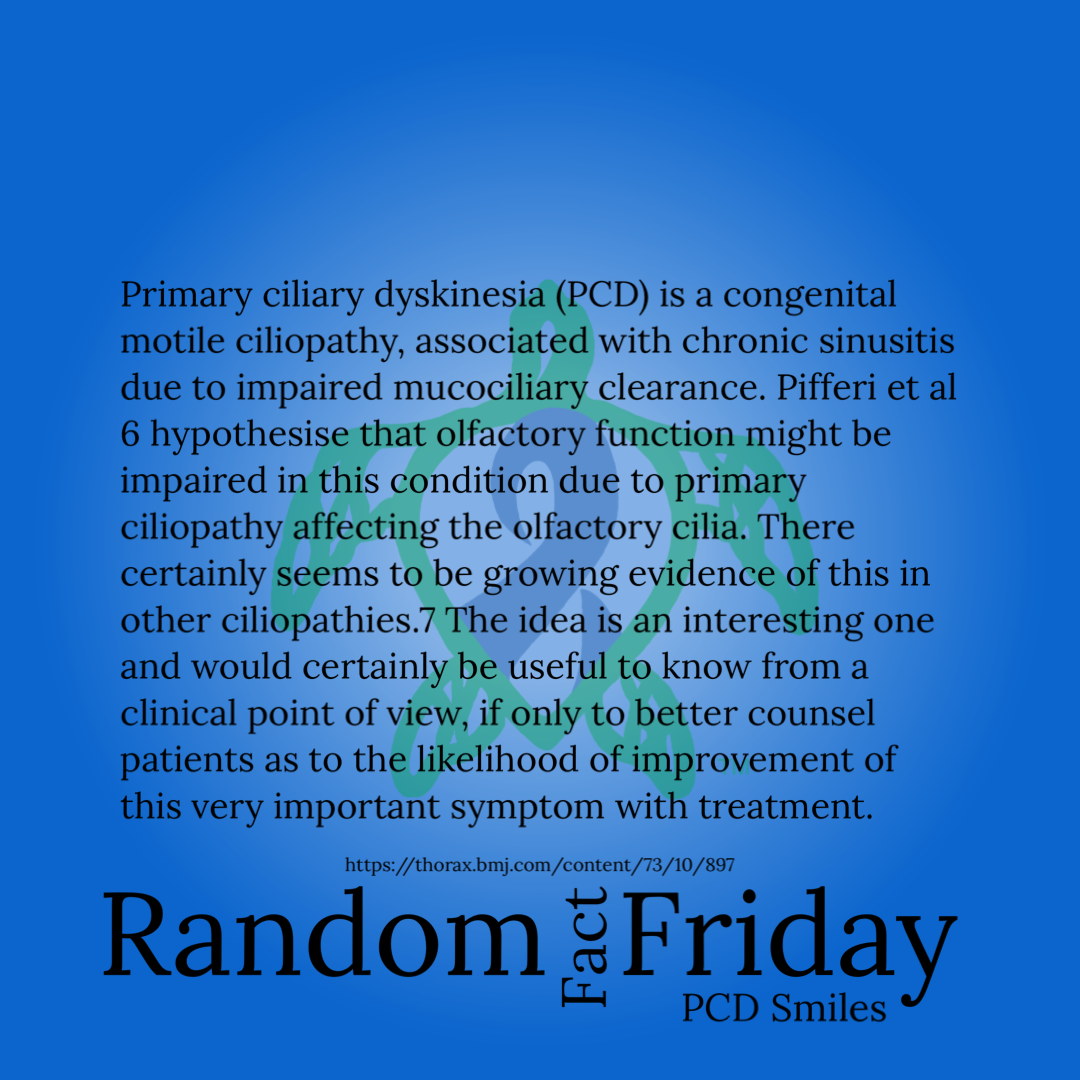
Primary ciliary dyskinesia is a rare genetic disorder that affects the function of motile cilia—tiny, moving structures that normally help sweep mucus out of the airways. When these cilia do not work properly, mucus and germs can be harder to clear. This can contribute to persistent respiratory symptoms, infections, and, in some people, bronchiectasis.
Bronchiectasis is damage that causes parts of the airways to become abnormally widened, making mucus clearance more difficult. Not everyone with PCD has the same symptoms, degree of lung disease, or treatment needs.
Airway clearance techniques are intended to help move mucus so it can be coughed or otherwise cleared from the lungs. In PCD, regular airway clearance is widely recommended as part of ongoing care, but research has not established one specific technique as best for everyone. European Respiratory Society
What Can Dry Airway Clearance Include?
Depending on a person’s care plan, airway clearance without a nebulized moistening treatment might include:
- Breathing techniques, such as the active cycle of breathing techniques or autogenic drainage.
- Huffing and controlled coughing, which help move and clear secretions.
- Positive expiratory pressure (PEP) or oscillating PEP devices, which create resistance or vibrations during exhalation.
- Manual techniques, such as chest percussion or vibrations provided by a trained caregiver or clinician.
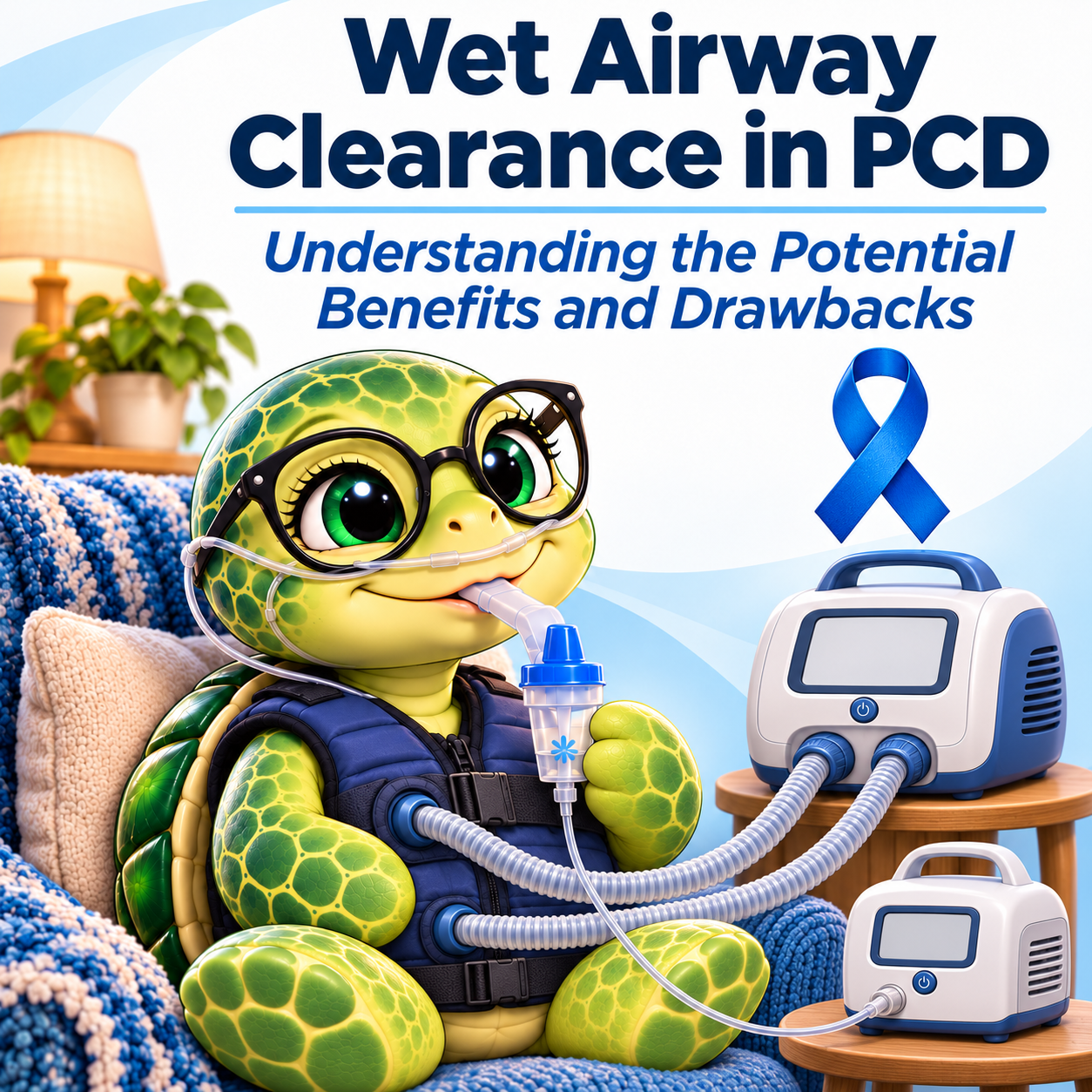
- High-frequency chest wall oscillation, often called vest therapy.
- Positioning or gravity-assisted drainage, when appropriate for the individual.
Some of these techniques can also be used as part of a routine that includes nebulized saline. The technique itself is not permanently “wet” or “dry”: the description depends on how it is used in a particular session.
Physical activity can also support respiratory health and help some people move mucus. Whether it can replace any part of a person’s prescribed airway clearance routine is an individual clinical decision.
The Potential Benefits
1. A Session May Be Simpler to Set Up
When a session does not include nebulized saline, there may be one less solution to prepare and one less nebulizer treatment to coordinate.
For a person whose day already includes medications, airway clearance, appointments, work, school, or caregiving, that difference may matter. A simpler session may be easier to fit into a busy morning or a day when energy is limited.
The time saved will vary. Some airway clearance devices still require setup, cleaning, charging, or assistance, and the clearance session itself remains important.
2. Some Techniques Are Portable
Certain breathing techniques and small handheld devices can be used in a variety of settings. Depending on the person’s plan and circumstances, that may make airway clearance easier to manage during travel, at school, at work, or away from home.
Equipment-free breathing techniques may be especially useful when access to electricity, a nebulizer, or a place to prepare supplies is limited. However, a technique needs to be taught and practiced properly; portability alone does not make it the right choice for everyone.
3. Some People Avoid Saline-Related Irritation
Nebulized saline is helpful for some people, but it is not comfortable for everyone. Inhaled saline, particularly hypertonic saline, can cause irritation, increased coughing, chest tightness, or narrowing of the airways in susceptible individuals.
An airway clearance session without saline avoids exposure to that particular inhaled treatment during the session. This can matter for someone whose care team has determined that saline is unsuitable or poorly tolerated. It does not mean that every symptom during treatment is caused by saline or that a prescribed treatment should be stopped without discussion. acprc.org.uk
4. Some Methods Support Independence
A person who has learned an appropriate breathing technique or can use a suitable handheld device may be able to complete some airway clearance without another person’s help.
That independence can be valuable for adults, adolescents learning to manage their care, and families whose schedules do not always align. At the same time, independence is not a requirement or a measure of success. Some people need or prefer assistance, and children may need different levels of supervision as they grow.
5. It May Reduce Some Equipment-Care Demands
Not using a nebulizer during a session may mean fewer nebulizer components to wash and disinfect afterward. For someone managing a substantial treatment routine, reducing equipment demands can make the day feel more manageable.
This benefit should not be confused with eliminating infection-prevention needs. Handheld airway clearance devices and other reusable equipment still require cleaning and care according to their instructions and the healthcare team’s recommendations.
6. It Can Provide Flexibility Within an Agreed Plan
A healthcare team may help a person develop more than one suitable way to perform airway clearance. For example, a technique that requires little equipment may be useful in certain circumstances, while a different routine is used at home.
That kind of flexibility can help a plan fit real life. It works best when the person and their team have already discussed when an alternative is appropriate, rather than leaving the person to make a difficult decision during a disrupted or demanding day.
The Potential Drawbacks
1. Mucus May Be Harder for Some People to Move
Airway clearance techniques work by helping mobilize and remove mucus, but they do not all address mucus properties in the same way. If mucus is particularly difficult to clear, a person may find that a session without a prescribed inhaled treatment is less comfortable or less productive.
Nebulized hypertonic saline is used in some care plans because it can draw water toward the airway surface and may make mucus easier to clear. Responses vary, however, and PCD-specific evidence for saline remains limited. It should not be assumed that everyone needs it—or that everyone can do equally well without it. acprc.org.uk
2. It May Take More Effort or Time for Some People
A technique may be physically demanding, especially for someone experiencing fatigue, breathlessness, pain, or an illness flare. A person who struggles to move secretions during a session may need more rest breaks, assistance, or a review of the technique.
That does not mean the person is doing something wrong. It may mean their current routine needs to be adjusted to match their health, energy, and circumstances.
3. It May Not Replace a Prescribed Inhaled Treatment
Nebulized medications and solutions are prescribed for different reasons. Some are intended to support mucus clearance; others may be used for airway narrowing, infection, or another specific purpose.
A person should not assume that completing airway clearance without a nebulizer replaces an inhaled medication or saline treatment in their plan. If a routine feels difficult to manage, the appropriate next step is to ask the prescribing team what each treatment is for and whether the plan can be adjusted.
4. A Technique Can Still Cause Discomfort
Removing nebulized saline from a session does not make every airway clearance method comfortable for every person. Depending on the technique and the individual, treatment may contribute to fatigue, soreness, dizziness, reflux, or increased breathlessness.
Some positions or techniques may need to be modified for people with particular medical concerns. A respiratory physiotherapist or other qualified clinician can assess these issues and suggest alternatives.
Coughing up blood, new chest pain, or a significant change in breathing should be discussed promptly with the healthcare team. Severe breathing difficulty, heavy bleeding, or other emergency symptoms require emergency care. People with a history of coughing up blood should ask their team for an individualized plan for airway clearance during an episode.
5. Less Visible Mucus Does Not Necessarily Mean a Better—or Worse—Session
Some people cough up mucus during or after airway clearance; others may swallow secretions or notice different amounts at different times. The amount produced can vary with the person’s usual symptoms, the technique, illness, and other factors.
A session that produces little visible mucus is not automatically ineffective. Likewise, producing more mucus does not by itself prove that one routine is better for long-term lung health. A care team can help interpret changes alongside symptoms, examination findings, and the person’s overall health.
6. Research Cannot Yet Answer Every Comparison
There is no strong basis for saying that all airway clearance without nebulized saline is better or worse than all routines that include it. Studies use different techniques, populations, treatment schedules, and measures of success.
A systematic review of airway clearance techniques in PCD found very low-certainty evidence, and current expert guidance does not identify one technique as superior for everyone with PCD. Research in people with bronchiectasis offers useful information, but results from that broader population cannot automatically be assumed to apply equally to every person with PCD. pubmed.ncbi.nlm.nih.gov
Dry Versus Wet: The Comparison Is More Nuanced Than It Sounds
|
Question |
Airway clearance without a nebulized moistening treatment |
Airway clearance with a nebulized moistening treatment |
|
What is included? |
A clearance technique performed without nebulized saline or another moistening treatment during that session. |
A clearance routine that includes a nebulized solution intended to support airway hydration or mucus clearance. |
|
Possible advantage |
May reduce setup, nebulizer care, and exposure to saline-related irritation. Some methods are portable. |
May help some people move difficult secretions and may be part of an individualized treatment plan. |
|
Possible limitation |
Some people may find mucus harder to move without an additional treatment. |
Adds equipment and treatment demands; some people experience irritation or airway narrowing. |
|
Does one suit everyone? |
No. Suitability depends on the person and the technique. |
No. Suitability and timing should be determined with the care team. |
A person’s routine may include different approaches at different times. For example, their team may recommend one plan when they are well and another during a respiratory illness. Neither label tells the whole story of how effective or appropriate a treatment is.
What About Drinking More Water?
Staying adequately hydrated supports general health, and it is reasonable to discuss fluid needs with a healthcare professional. But drinking water should not be presented as a proven substitute for prescribed nebulized therapy or airway clearance.
Some people also have medical reasons to follow individualized fluid guidance. The right approach depends on the person’s overall health and treatment plan.
Questions to Bring to Your Care Team
If you are wondering whether airway clearance without a nebulized moistening treatment fits your needs, these questions may help start the conversation:
- What is each part of my current routine intended to do?
- Is my airway clearance technique still appropriate for my symptoms and lung health?
- How can I tell whether difficulty clearing mucus needs further assessment?
- If saline causes coughing, tightness, or discomfort, what should I do?
- Are there suitable options for travel, work, school, or low-energy days?
- How should my routine change, if at all, when I am sick?
- What cleaning and disinfection does each piece of my equipment require?
- How often should my technique and overall plan be reviewed?
A respiratory physiotherapist or physical therapist with airway clearance experience can help assess technique, positioning, comfort, and practical barriers. Depending on the healthcare system and local scope of practice, respiratory therapists and other qualified clinicians may also have important roles in teaching and supporting respiratory care.
Making Room for Real Life
Airway clearance is more than the minutes written on a treatment plan. It can include preparing equipment, completing the session, clearing secretions, cleaning devices, and recovering enough energy to move on with the day.
A routine that looks straightforward on paper may be difficult to sustain in practice. Cost, access to equipment, discomfort, privacy, fatigue, school schedules, and caregiver availability all matter.
Sharing those details with the care team is not complaining or rejecting treatment. It gives the team information they need to help design a plan that is both clinically appropriate and workable.
Key Message
Dry airway clearance is a way of performing a clearance session without a nebulized moistening treatment—not a single technique and not automatically a better or worse option. The goal is to find an individualized routine that helps clear mucus, is tolerable, and can be maintained within the realities of daily life.
Be sure to join us next Thursday for another conversation about primary ciliary dyskinesia.
Join our Facebook group Turtle Talk Café today.
We have several ways that you can donate to PCD Smiles;
- Visit Smile E. Turtle's Amazon Wishlist
- For more information on how you can donate, please visit our "Donation" page to check out our "Do & Don't policies.
- Or sponsor a PCD Smiles cheer package today!
- To shop for your “Official” turtle care ribbon gear today, visit PCD Style
Thank you for your consideration!
Sources and Further Reading
- Primary ciliary dyskinesia: a national expert consensus statement on standards of care
- Airway Clearance Techniques in Primary Ciliary Dyskinesia: A Systematic Review
- European Respiratory Society clinical practice guideline for the management of adult bronchiectasis
- Physiotherapy standards of care for children and young people with primary ciliary dyskinesia
This article is for educational and awareness purposes only and is not a substitute for professional medical advice, diagnosis, or treatment. Health needs and treatment plans vary. Consult your PCD or respiratory care team about your individual circumstances, and do not start, stop, or change medications, devices, or treatments based on this article. Never disregard professional medical advice or delay seeking it because of something you have read here.