

Growing up comes with plenty of changes—new responsibilities, new routines, college or work, relationships, and greater independence. For someone living with Primary Ciliary Dyskinesia (PCD), there is another major milestone: transitioning from pediatric healthcare to adult healthcare.
This transition isn't simply about
changing doctors.
It is the process of moving from a family-centered pediatric model, where parents and caregivers often manage much of a child's healthcare, toward an adult model in which the person with PCD becomes the primary manager and decision-maker for their own care.
Because PCD is a lifelong genetic condition, making this transition successfully is important for maintaining continuity of care, protecting lung health, and keeping necessary treatments and monitoring on track.
What Is Primary Ciliary Dyskinesia?
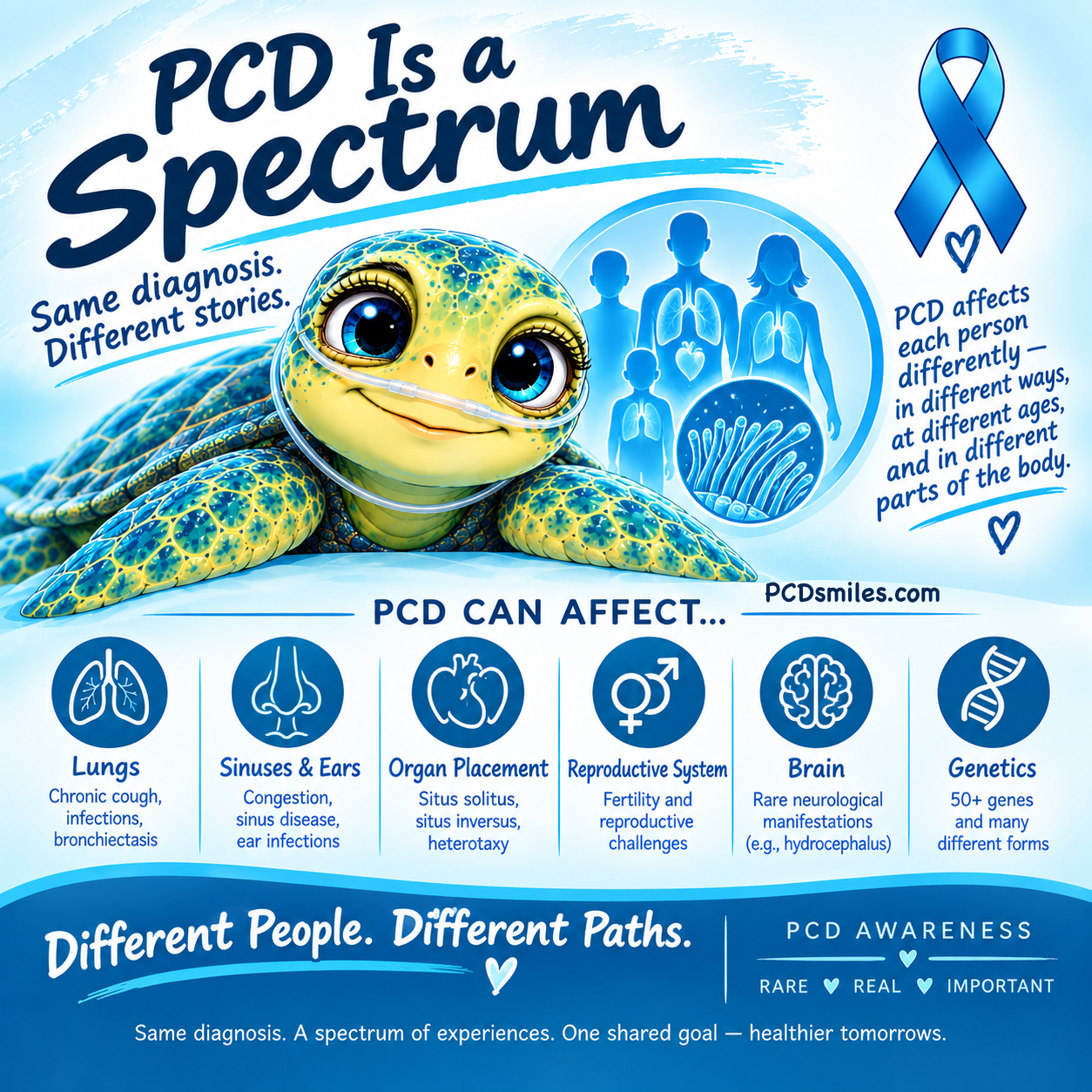
PCD is a rare inherited disorder affecting motile cilia—microscopic, hair-like structures that normally move mucus and other fluids throughout the body.
In the respiratory system, healthy cilia help move mucus, bacteria, dust, and other particles out of the airways. In PCD, cilia may be absent, structurally abnormal, move incorrectly, or fail to coordinate properly.
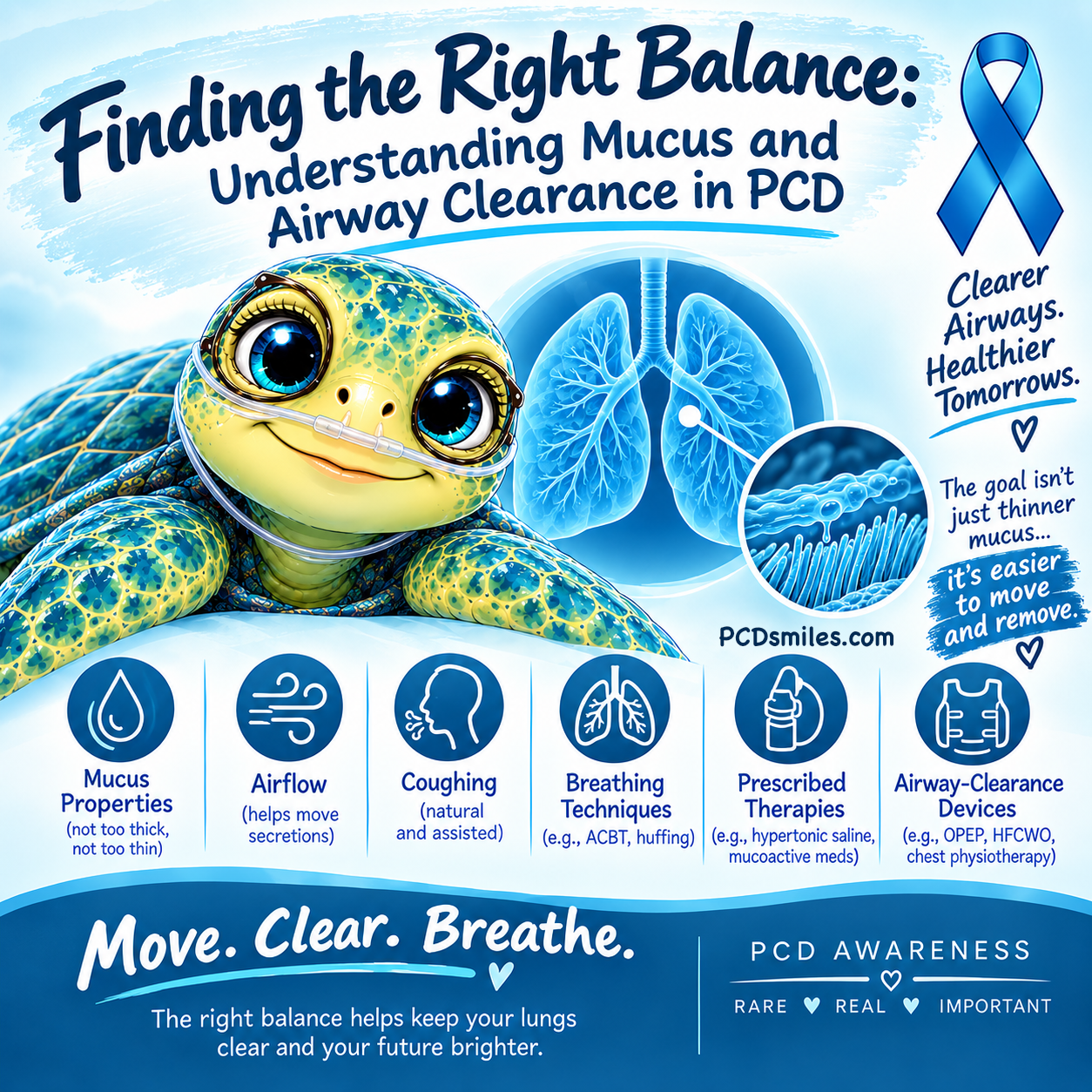
The result is impaired mucociliary clearance.
Mucus can become trapped in the lungs, sinuses, and middle ears, contributing to problems such as:
- Chronic wet cough
- Recurrent respiratory infections
- Chronic sinus disease
- Ear disease and hearing problems
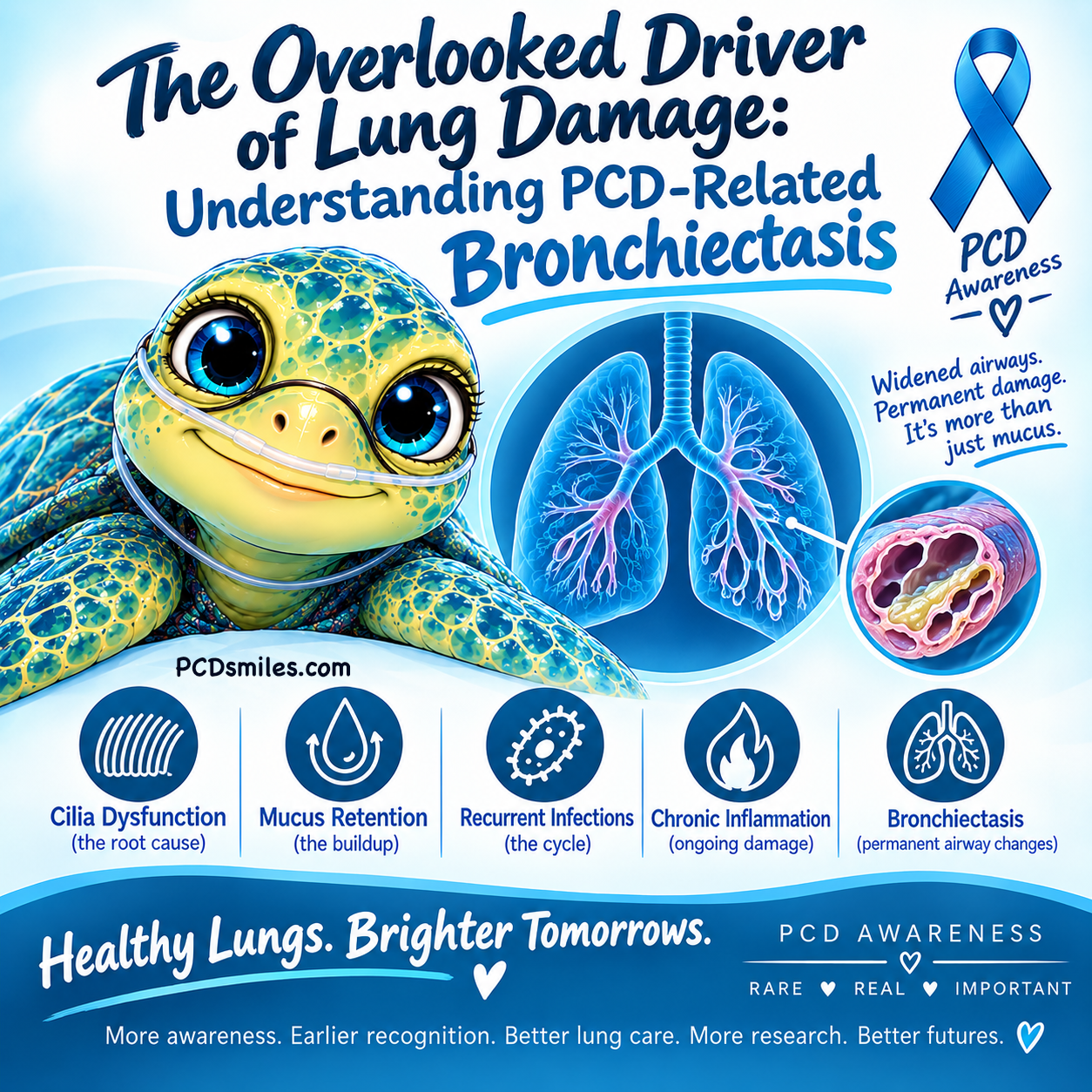
- Bronchiectasis and other forms of lung damage
PCD can also affect other parts of the body, including the reproductive system and, in some people, the positioning of internal organs.
PCD doesn't end when childhood ends.
That makes a successful transition into adult care particularly important.
Why Does the Transition Matter?
During childhood, parents or caregivers often take responsibility for much of the healthcare workload.
They may:
- Schedule appointments
- Communicate with healthcare providers
- Manage medications and refills
- Track symptoms and test results
- Organize airway-clearance treatments
- Coordinate appointments among multiple specialists
As a young person enters adulthood, those responsibilities gradually shift to them.
Adult healthcare also tends to operate differently. Appointments may be more focused on individual autonomy, private discussions, and the patient's ability to communicate directly with healthcare providers and make informed decisions.
For someone with PCD, this can be a significant adjustment.
PCD often requires care from multiple specialties, including pulmonology, ENT, audiology, infectious disease, reproductive specialists, genetics, and others depending on the individual's needs.
The young adult may suddenly be expected to coordinate all of this themselves.
Without preparation, that can create gaps in care.
The Challenges of Transitioning With PCD
PCD Requires Multisystem Care
PCD isn't just a lung condition.
A young adult may need ongoing monitoring of their lungs, sinuses, ears, hearing, infections, and reproductive health. They may also need specialized testing and treatment related to their particular form of PCD.
Moving from a familiar pediatric team to an adult healthcare system can make coordinating these needs more complicated.
Daily Symptoms Can Become "Normal"
Living with PCD for years can create another challenge: symptom habituation.
A chronic wet cough, constant congestion, frequent mucus production, or recurrent infections may simply feel like "normal life" to someone who has experienced them since childhood.
That can make it easier to underestimate symptoms or postpone medical care.
The same thing can happen with treatment.
Airway clearance can be time-consuming. When college, work, social activities, relationships, or other responsibilities compete for attention, it can be tempting to skip treatments.
But the transition to adulthood is precisely when learning to maintain these routines independently becomes especially important.
PCD Transition Pathways Are Still Developing
Unlike some better-established chronic diseases, PCD has historically lacked universally standardized pediatric-to-adult transition pathways.
That means transition planning may vary between healthcare systems and centers.
For families and patients, this makes early preparation and proactive communication especially valuable.
When Should Transition Planning Begin?
Transition shouldn't happen suddenly when someone turns 18.
It should be a gradual process.
Many pediatric teams can begin introducing transition skills during the teenage years—around age 14 is a reasonable time to start discussing what independence will eventually look like.
The goal isn't for parents to suddenly step away.
Instead, responsibility should gradually shift from the parent or caregiver to the young person.
Start Practicing Independence
A teenager can begin by:
- Calling the doctor's office themselves
- Scheduling or confirming appointments
- Requesting prescription refills
- Learning the names and purposes of their medications
- Answering questions during appointments
- Describing their symptoms and treatment routines
- Learning how to explain their PCD to unfamiliar healthcare providers
- Understanding their airway-clearance routine
- Knowing when they need to contact their medical team
Parents can remain involved while allowing the young person to take an increasingly active role.
Think of it as practice for adulthood rather than a sudden handoff.
Build Your Own Medical Summary
One of the most useful tools during transition is a portable medical history.
A young adult with PCD should ideally know—or have access to—important information about their condition, including:
- Their PCD diagnosis
- Genetic findings, if known
- Results of specialized PCD testing
- Baseline lung-function measurements
- Imaging history
- Respiratory cultures and previous infections
- Current medications
- Previous antibiotics and significant treatment history
- Airway-clearance techniques and equipment
- Allergies
- ENT and hearing history
- Reproductive or fertility considerations when relevant
- Other important diagnoses, including organ laterality abnormalities when present
Having this information available can make changing healthcare systems significantly easier.
It also gives the young adult greater ownership of their medical care.
Find an Adult PCD Team
Another critical step is identifying an adult healthcare team familiar with PCD.
PCD is rare, and many general adult healthcare providers may have limited experience managing it.
Whenever possible, young adults should transition to providers or centers with experience caring for adults with PCD and coordinating its multisystem complications.
Organizations such as the PCD Foundation can also be useful resources for finding information about specialized PCD care.
The ideal transition isn't simply:
Pediatric doctor → new adult doctor
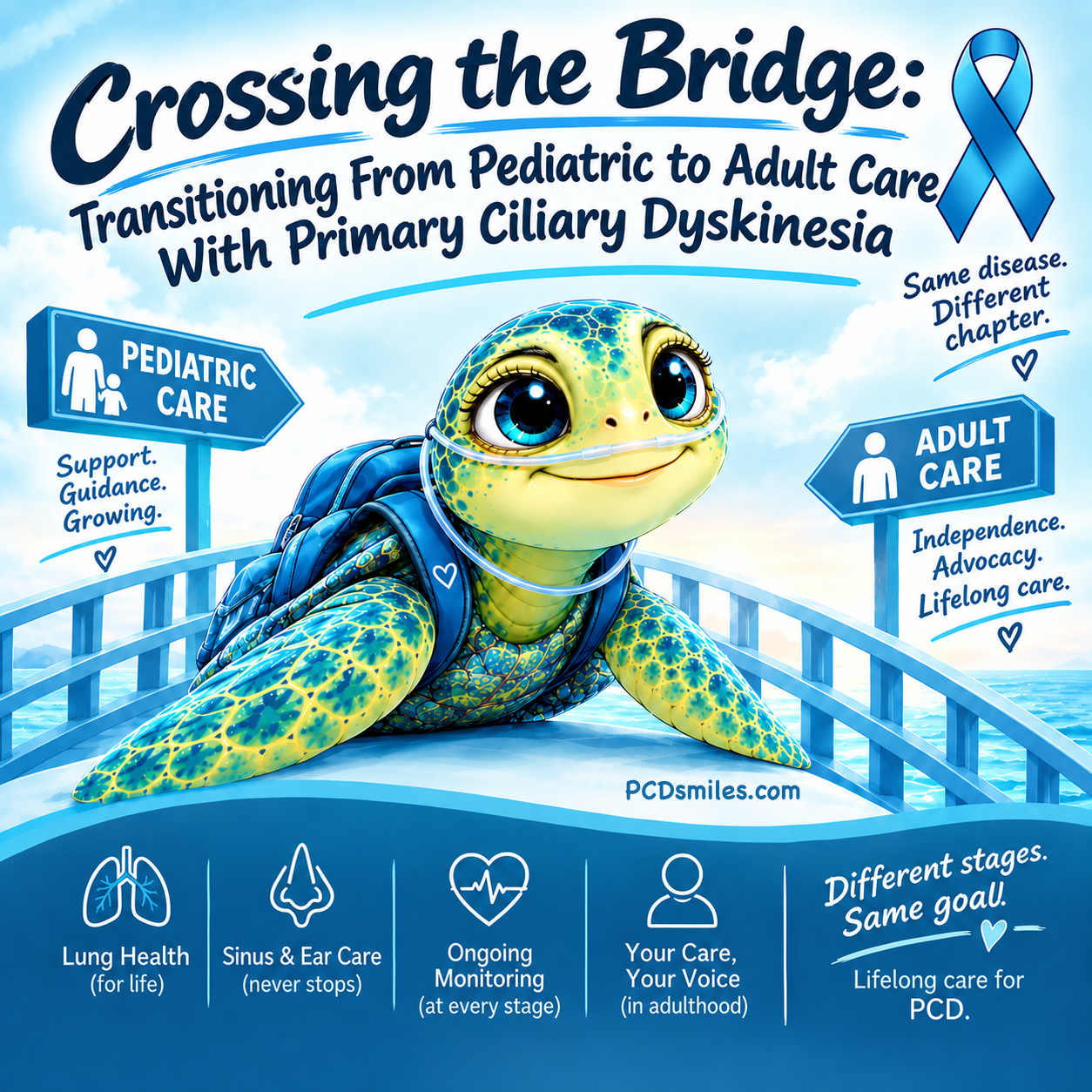
It is a bridge between two healthcare systems, with communication and continuity built into the process.
Don't Let Airway Clearance Get Lost in the Transition
One of the most important aspects of PCD management is maintaining an effective airway-clearance routine.
Depending on the individual, this may involve:
- Breathing techniques
- Huff coughing
- PEP or OPEP devices
- Nebulized therapies
- Chest physiotherapy
- High-frequency chest wall oscillation
- Oscillation and Lung Expansion
- Other specialized airway-clearance techniques
The specific treatment plan should be individualized with the person's healthcare team.
The challenge during transition is making these treatments part of an independent adult routine.
College schedules change.
Jobs change.
Living situations change.
Travel happens.
Life gets busy.
Building airway clearance into dependable daily habits can make it easier to maintain treatment even when everything else changes.
What Does a Successful Transition Look Like?
A successful transition doesn't necessarily mean a young person suddenly handles everything alone.
It means they increasingly become the driver of their own healthcare.
They know:
What do I have?
They can explain their PCD and how it affects them.
What do I do?
They understand their medications, airway-clearance routine, and monitoring.
Who takes care of me?
They know their healthcare providers and how to contact them.
What should I watch for?
They recognize changes in symptoms that may require medical attention.
Where are my records?
They can access important medical information when needed.
What happens next?
They understand their follow-up schedule and long-term care plan.
That level of knowledge doesn't happen overnight.
It is learned over time.
Parents Have a Role, Too
Transition can be difficult for parents and caregivers as well.
After years of scheduling appointments, managing treatments, communicating with doctors, and advocating for their child, stepping back can feel uncomfortable.
But stepping back doesn't have to mean stepping away.
Parents can become coaches rather than managers.
Instead of making every phone call, they can encourage their young adult to make the call.
Instead of answering every question during an appointment, they can allow their child to answer first.
Instead of managing every medication, they can help their child learn how to manage it independently.
The goal is not to remove support.
The goal is to transfer ownership.
Building a Lifelong Relationship With Healthcare
Transitioning to adult care is more than an administrative change.
It is an opportunity for a young person with PCD to understand their disease, learn how to advocate for themselves, and develop the skills they will need to manage a lifelong condition.
For some people, the transition will be straightforward.
For others, it may take longer or require additional support.
What matters is that the process is planned rather than abrupt.
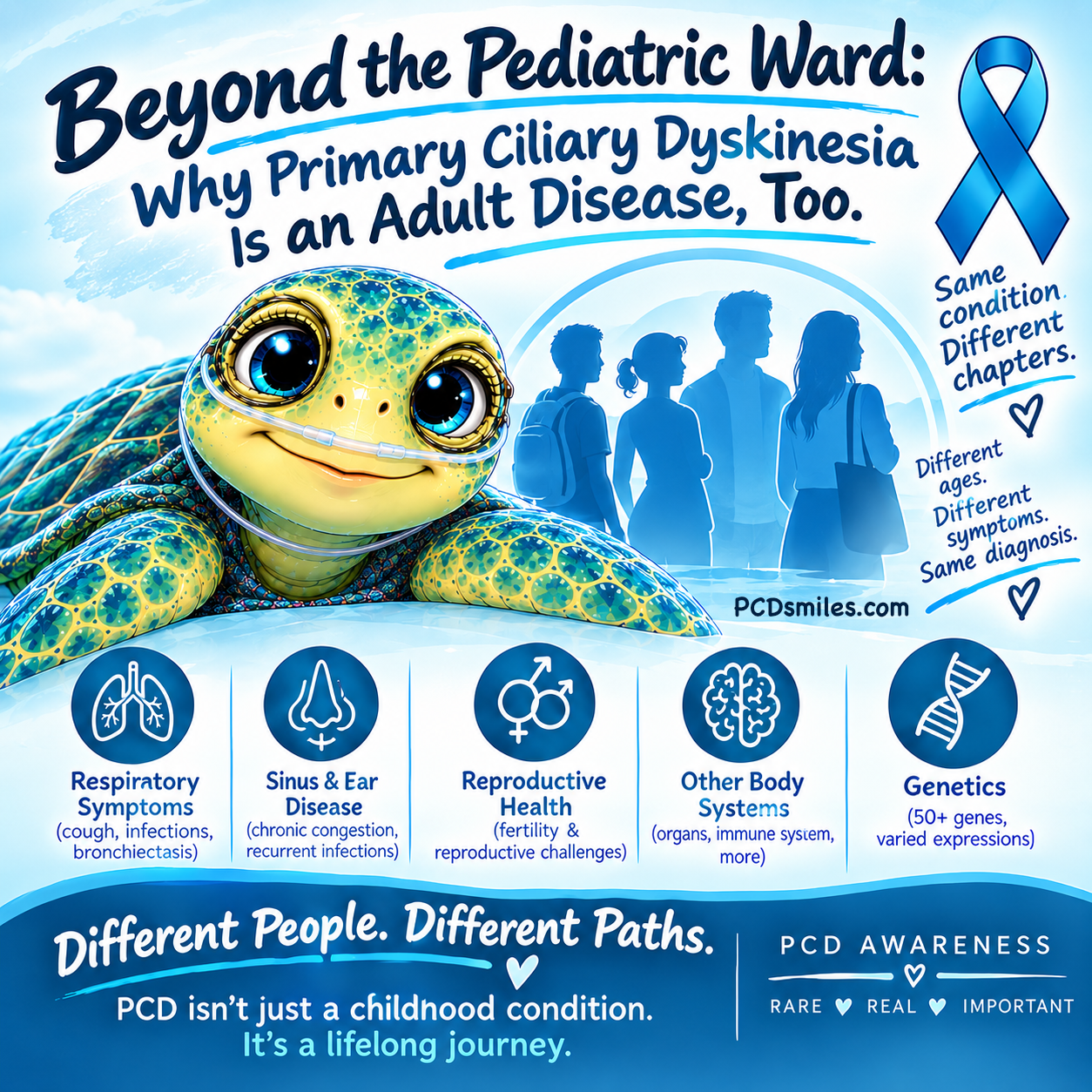
PCD doesn't disappear when pediatric care ends.
The need for airway clearance, lung-function monitoring, infection management, ENT care, and other specialized care can continue throughout adulthood.
The healthcare system changes.
The person grows up.
But PCD remains.
A well-planned transition helps ensure that when a young person crosses the bridge from pediatric to adult healthcare, they don't have to cross it alone—and they don't have to leave their essential care behind.
The goal isn't simply to transition from one doctor to another. The goal is to help a young person with PCD become confident, informed, and empowered to manage their lifelong health.
Be sure to join us tomorrow for another conversation about primary ciliary dyskinesia.
Join our Facebook group Turtle Talk Café today.
We have several ways that you can donate to PCD Smiles;
- Visit Smile E. Turtle's Amazon Wishlist
- For more information on how you can donate, please visit our "Donation" page to check out our "Do & Don't policies.
- Or sponsor a PCD Smiles cheer package today!
- To shop for your “Official” turtle care ribbon gear today, visit PCD Style
Thank you for your consideration!
Medical Disclaimer
This article is intended for general educational and informational purposes only and is not a substitute for professional medical advice, diagnosis, or treatment. Infection risks and appropriate prevention strategies can vary considerably between people with PCD based on their lung health, respiratory cultures, treatments, age, and other medical conditions.
This article is for educational purposes and does not establish that over-thinning mucus causes increased infection risk in people with PCD. Responses to airway-clearance and mucoactive therapies vary. Any changes to prescribed treatments should be discussed with a healthcare professional familiar with PCD.
Cleaning and disinfection recommendations for respiratory equipment can also vary by device and manufacturer. Always follow the instructions provided by your healthcare team and equipment manufacturer.
Do not start, stop, or change medications, airway-clearance treatments, infection-control practices, or other aspects of your medical care based solely on this article. If you have PCD and are concerned about an infection, worsening respiratory symptoms, or possible exposure to a pathogen, contact your PCD or respiratory healthcare team for individualized guidance.
If you are experiencing severe or rapidly worsening breathing difficulties or another medical emergency, seek urgent medical attention.