

Imagine running a marathon every day without ever leaving your chair.
For most people, breathing is automatic—something the body does thousands of times a day without conscious effort. But for people living with Primary Ciliary Dyskinesia (PCD), a rare genetic disorder affecting the function of microscopic cilia, breathing can become a much more demanding process.
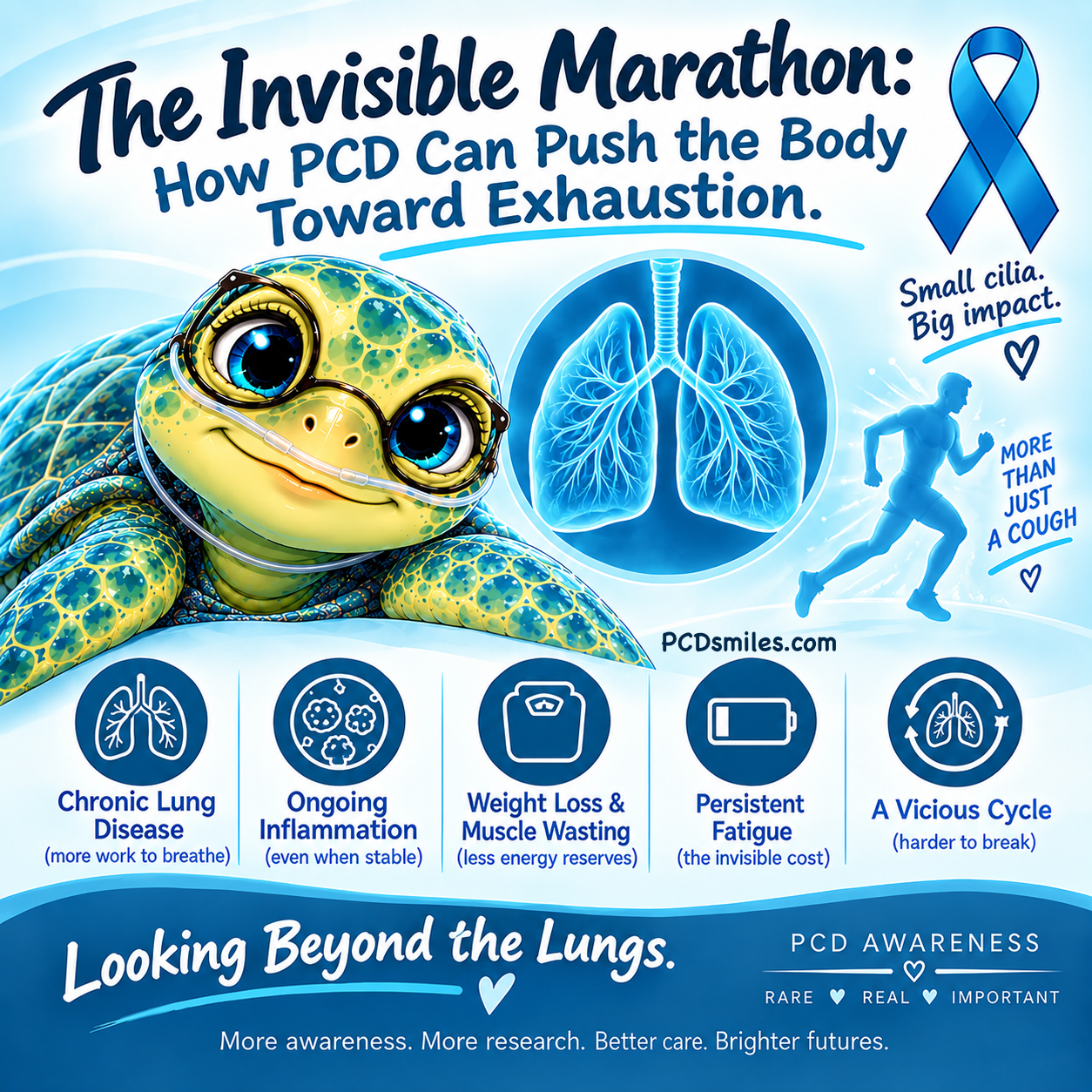
PCD can lead to chronic mucus retention, recurrent respiratory infections, inflammation, and progressive lung damage. Over time, severe chronic lung disease can place enormous demands on the
body and contribute to weight loss, muscle wasting, and profound fatigue—a group of problems often discussed under the broader concept of pulmonary cachexia.
Importantly, pulmonary cachexia is not simply "not eating enough." It is a complex problem involving increased energy demands, chronic inflammation, reduced muscle mass, and the effects of severe respiratory disease. While pulmonary cachexia is well recognized in some chronic lung diseases, more research is needed to understand its frequency and specific mechanisms in people with PCD.
To understand how this can happen, we first have to look inside the lungs.
The Broken Cleaning Crew
Healthy airways are lined with millions of microscopic, hair-like structures called cilia.
Think of them as a highly coordinated cleaning crew.
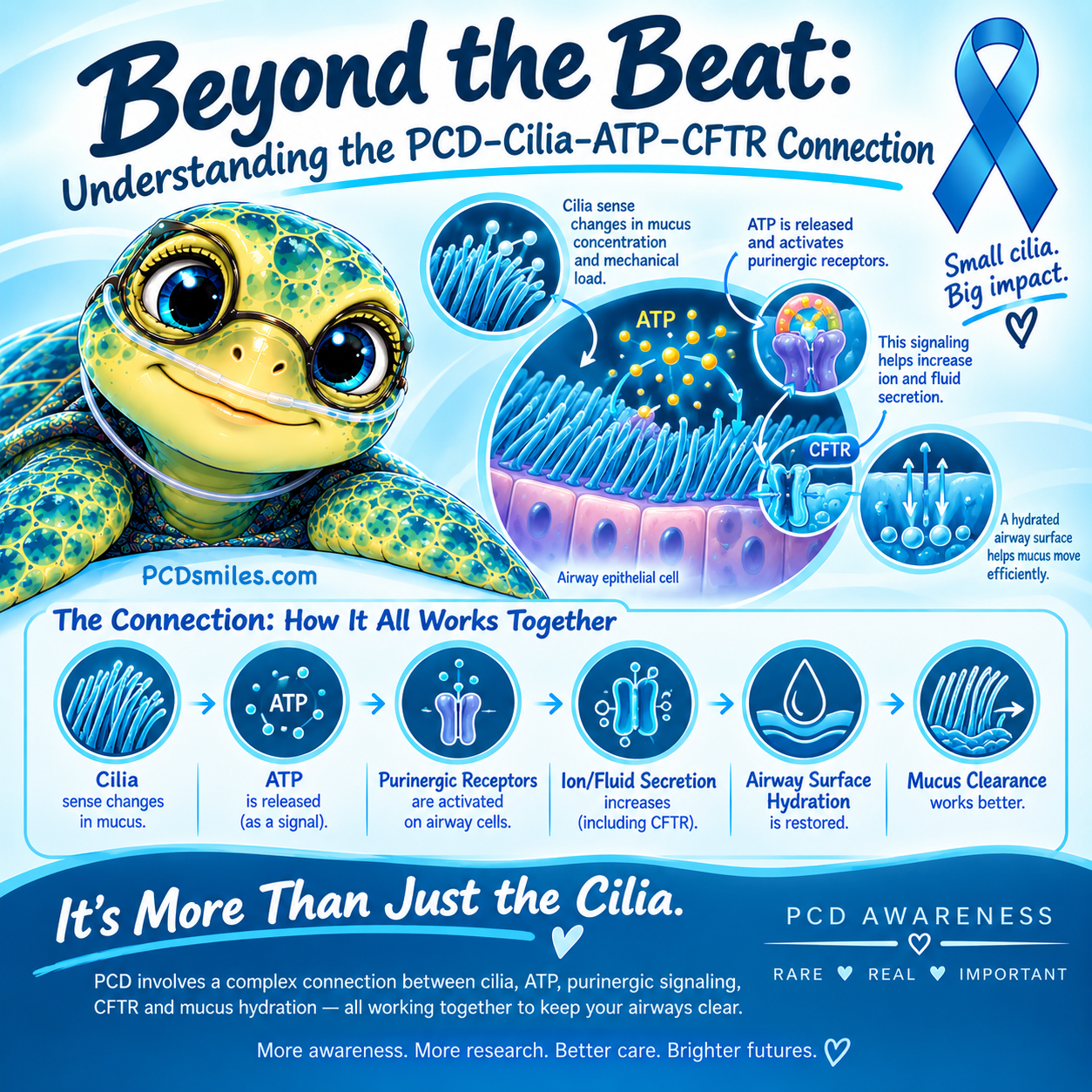
Working together, these tiny structures move mucus toward the throat, carrying trapped particles, bacteria, and other unwanted material out of the lungs.
In people born with PCD, the cilia do not function normally. Depending on the underlying genetic cause, they may be unable to move, beat abnormally, or move in a way that is ineffective for clearing mucus.
When mucociliary clearance is impaired, mucus can remain trapped in the airways.
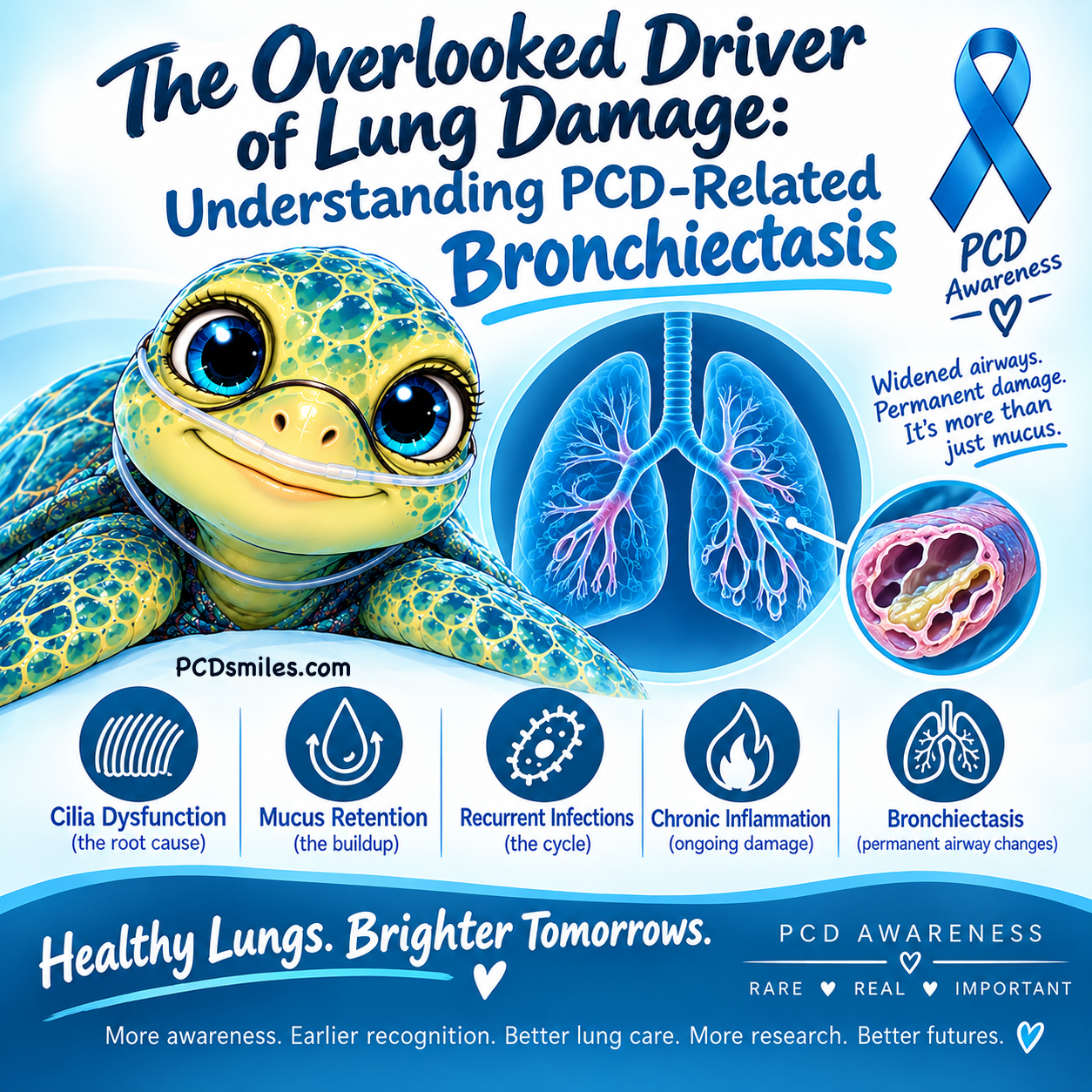
That retained mucus creates an environment where bacteria can persist and infections can occur repeatedly. Over time, recurrent infections and chronic inflammation can damage the airway walls and contribute to bronchiectasis, a permanent widening and remodeling of the bronchial tubes.
For many people with PCD, this can mean a lifetime of chronic wet cough, recurrent respiratory infections, and progressive lung disease.
PCD is rare, affecting approximately 1 in 7,500 people, although estimates vary. Diagnosis can also be challenging because symptoms may overlap with conditions such as asthma, chronic bronchitis, recurrent pneumonia, or chronic sinus disease. As a result, some people can go years—or even decades—before receiving an accurate diagnosis.
The Hidden Strain: What Is Pulmonary Cachexia?
The consequences of chronic lung disease aren't always visible from the outside.
When the lungs are repeatedly infected, inflamed, structurally damaged, or burdened by retained secretions, breathing can require substantially more effort.
The muscles involved in breathing—including the diaphragm and other respiratory muscles—may have to work harder and for longer periods of time.
That increased work requires energy.
At the same time, chronic inflammation can alter the body's metabolism. During prolonged illness, inflammatory signaling can contribute to muscle breakdown and changes in how the body uses energy.
The result can become a difficult cycle involving:
Chronic lung disease → increased work of breathing → increased energy demands → muscle loss and fatigue → weaker muscles → even greater difficulty managing the demands of breathing.
This is one reason severe chronic respiratory disease can affect far more than the lungs.
The Vicious Cycle
The process can be thought of like this:
Trapped mucus & recurrent infections
↓
Chronic inflammation & airway damage
↓
Greater work of breathing
↓
Increased energy requirements
↓
Weight loss & muscle wasting
↓
Reduced strength and respiratory-muscle reserve
↓
Breathing and physical activity become more difficult
↓
Greater vulnerability to complications of chronic lung disease
And the cycle can continue.
This doesn't mean that every person with PCD will develop pulmonary cachexia or severe muscle wasting. PCD varies considerably from person to person, and factors such as lung function, infection burden, bronchiectasis, nutritional status, activity level, and other medical conditions can all influence an individual's experience.
But the possibility of significant nutritional and muscular consequences is an important part of understanding severe chronic lung disease.
Why Breathing Can Become So Energy-Intensive
We often think of breathing as effortless because we don't normally have to think about it.
But breathing is still physical work.
When airways are narrowed, damaged, filled with difficult-to-clear secretions, or affected by chronic lung disease, the respiratory system may have to work harder to move air.
For someone with advanced respiratory disease, even ordinary activities can become physically demanding.
Walking across a room.
Taking a shower.
Getting dressed.
Eating a meal.
Talking for an extended period.
These activities can require energy that a healthy person may take for granted.
And when breathing itself consumes more of the body's energy budget, there may be less energy available for everything else.
The Role of Chronic Inflammation
There is another piece to this puzzle: inflammation.
PCD can involve recurrent respiratory infections and chronic airway inflammation. The immune system repeatedly responds to bacteria and other threats within the lungs.
Inflammation is necessary for fighting infection, but persistent inflammation can also have consequences throughout the body.
During prolonged illness, inflammatory signals can contribute to changes in metabolism and promote the breakdown of skeletal muscle.
This creates an important distinction:
Muscle loss isn't necessarily caused by simply failing to eat enough calories.
A person can lose muscle because the body is simultaneously dealing with increased energy demands, chronic inflammation, illness, reduced physical activity, and altered metabolism.
That is why significant weight or muscle loss in someone with chronic lung disease deserves medical attention rather than being dismissed as simply "not eating enough."
When Muscle Loss Affects Breathing
The cycle can become particularly concerning when muscle loss involves the muscles used for breathing.
The respiratory muscles are muscles too.
If overall muscle strength decreases, respiratory-muscle reserve may also be affected. Reduced strength can make physical activity more difficult, which may lead to further inactivity and deconditioning.
At the same time, weakened muscles can make the physical demands of chronic respiratory disease harder to tolerate.
The result can become a self-reinforcing cycle:
Lung disease → increased work of breathing → fatigue → reduced activity → muscle loss → reduced physical reserve → greater difficulty coping with respiratory demands.
This is one reason maintaining nutrition, muscle strength, physical activity when medically appropriate, and effective airway clearance can be so important in chronic lung disease.
Signs Worth Recognizing
Problems involving nutrition and muscle mass can develop gradually, making them easy to overlook.
Some potential warning signs include:
Unexplained Weight Loss
A noticeable or continuing loss of weight without intentionally trying to lose weight should be evaluated, particularly in someone with chronic lung disease.
Visible Muscle Loss
Muscle wasting may become noticeable in areas such as the shoulders, arms, thighs, or other parts of the body. Loss of strength can accompany the physical changes.
Persistent, Overwhelming Fatigue
Severe fatigue that interferes with everyday activities may reflect the cumulative burden of chronic disease, infection, increased work of breathing, poor nutrition, deconditioning, or other factors.
Mealtime Fatigue or Early Fullness
Some people with significant respiratory disease may become exhausted while eating or feel full after relatively small amounts of food. Breathing and eating compete for physical resources, and shortness of breath can make meals particularly difficult.
These symptoms are not specific to pulmonary cachexia or PCD, so they should not be used to diagnose the condition on their own. They are reasons to talk with a healthcare professional about what may be contributing to the changes.
Moving Forward: Awareness and Action
Managing PCD is about much more than treating an occasional respiratory infection.
Long-term care may involve a multidisciplinary team that can include pulmonologists, respiratory therapists, physical therapists, dietitians, and other specialists, depending on an individual's needs.
Airway clearance remains a cornerstone of PCD management because reducing retained mucus can help reduce the burden placed on the lungs.
Nutrition is another important part of the picture.
For someone experiencing unintended weight loss or muscle depletion, a registered dietitian experienced in chronic respiratory disease can help evaluate nutritional needs and develop an individualized plan. Depending on the person's circumstances, this may involve increasing calorie and protein intake, using nutrient-dense foods, or addressing difficulties that make eating challenging.
Maintaining muscle strength and physical conditioning, when medically appropriate, may also help preserve functional capacity.
And, of course, treating respiratory infections and monitoring lung health are critical components of long-term PCD care.
Awareness Is Part of the Treatment
There is another piece of the puzzle that doesn't require a prescription:
Awareness.
PCD is rare, and rare diseases are often misunderstood or overlooked.
When people understand that PCD can affect much more than mucus clearance, they are better equipped to recognize the potential consequences of chronic respiratory disease—including fatigue, nutritional challenges, muscle loss, and declining physical reserve.
Greater awareness can also help support earlier recognition and diagnosis, better access to specialized care, and continued research into the long-term effects of PCD.
Organizations such as the PCD Foundation also play an important role in supporting education, patient resources, community connections, and research.
The Invisible Marathon
For someone living with significant PCD-related lung disease, the struggle may not always be visible.
There may be no obvious sign that every breath requires more effort.
No one may see the energy being spent simply to breathe.
No one may see the calories being consumed by increased respiratory work, the muscle being lost during prolonged illness, or the exhaustion that follows everyday activities.
That is why the concept of the "Invisible Marathon" matters.
PCD is a disease of microscopic cilia—but the consequences of dysfunctional cilia can extend throughout the body.
The lungs struggle to clear mucus.
Infections and inflammation can damage the airways.
Breathing can become more demanding.
The body's energy requirements can rise.
Muscle and nutritional reserves can be depleted.
And for some people with severe chronic lung disease, those processes can contribute to a devastating cycle of weakness and exhaustion.
Breathing shouldn't feel like running a marathon every day.
Understanding the hidden physical demands of PCD is another step toward earlier recognition, better supportive care, stronger research, and healthier futures for the people living with this rare disease.
Be sure to join us tomorrow for another conversation about primary ciliary dyskinesia.
Join our Facebook group Turtle Talk Café today.
We have several ways that you can donate to PCD Smiles;
- Visit Smile E. Turtle's Amazon Wishlist
- For more information on how you can donate, please visit our "Donation" page to check out our "Do & Don't policies.
- Or sponsor a PCD Smiles cheer package today!
- To shop for your “Official” turtle care ribbon gear today, visit PCD Style
Thank you for your consideration!
Medical Disclaimer
This article is intended for general educational and informational purposes only and is not a substitute for professional medical advice, diagnosis, or treatment. Infection risks and appropriate prevention strategies can vary considerably between people with PCD based on their lung health, respiratory cultures, treatments, age, and other medical conditions.
Cleaning and disinfection recommendations for respiratory equipment can also vary by device and manufacturer. Always follow the instructions provided by your healthcare team and equipment manufacturer.
Do not start, stop, or change medications, airway-clearance treatments, infection-control practices, or other aspects of your medical care based solely on this article. If you have PCD and are concerned about an infection, worsening respiratory symptoms, or possible exposure to a pathogen, contact your PCD or respiratory healthcare team for individualized guidance.
If you are experiencing severe or rapidly worsening breathing difficulties or another medical emergency, seek urgent medical attention.