
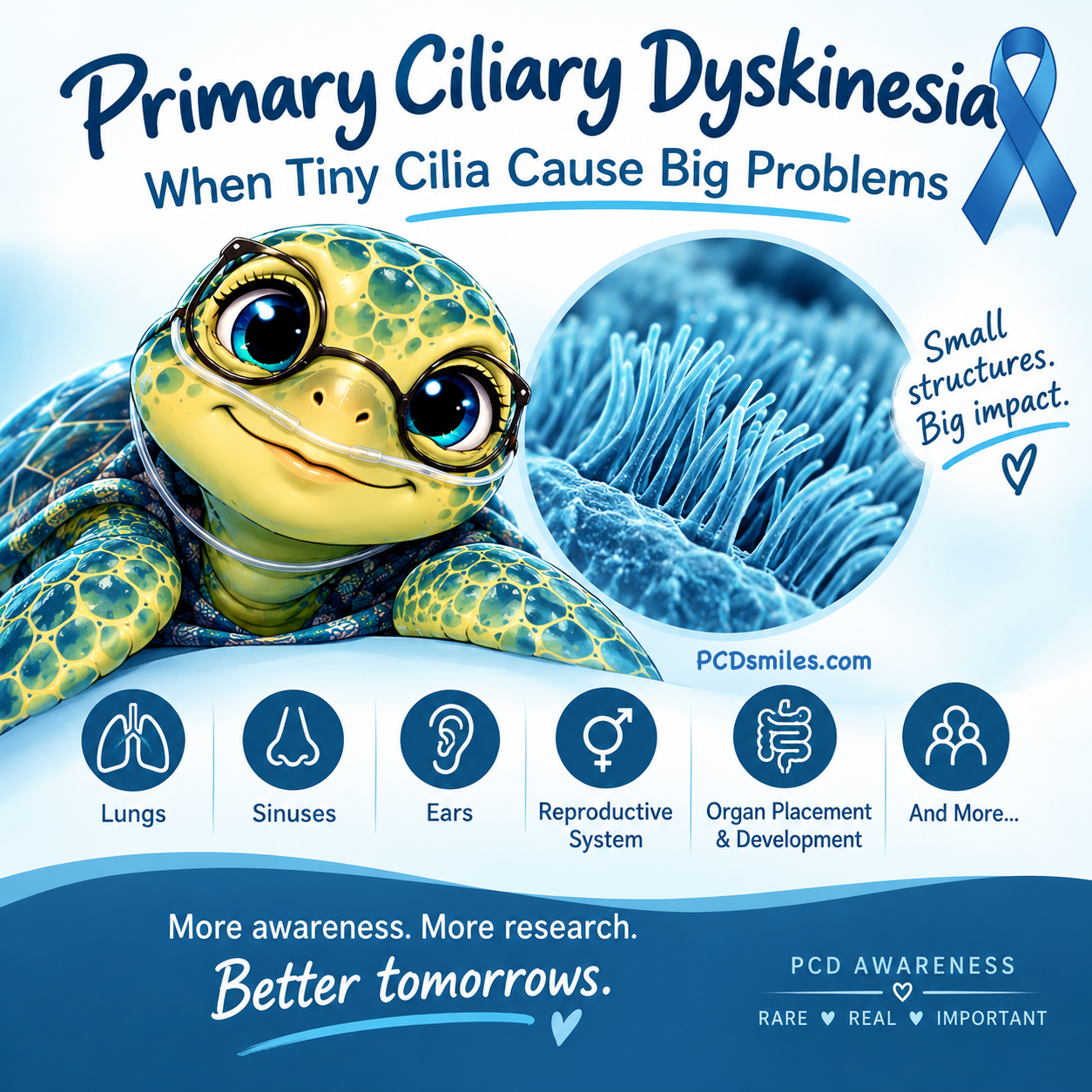
Imagine having millions of tiny cleaning crews inside your body—but those cleaning crews don't work properly. That's essentially what happens with Primary Ciliary Dyskinesia (PCD), a rare genetic condition that affects the tiny, hair-like structures called cilia.
PCD affects approximately 1 in 7,500 to 30,000 people. Because many of its symptoms can look like more common conditions, such as
asthma, allergies, or cystic fibrosis, people with PCD may sometimes go years before receiving the correct diagnosis.
What Are Cilia—and Why Are They So Important?
Cilia are microscopic, hair-like structures that line parts of the body's respiratory system, including the nose, sinuses, and lungs.
In healthy airways, millions of cilia work together in a coordinated, wave-like motion. Their job is to move mucus through the airways. That mucus acts like a sticky trap, catching dust, bacteria, viruses, and other particles that we breathe in.
The cilia then move the mucus toward the throat, where it can be swallowed, coughed out, or sneezed away.
Think of it as a microscopic conveyor belt constantly cleaning your airways.
With PCD, genetic changes cause the cilia to be abnormally formed, missing, or unable to move normally. As a result, the body's normal mucus-clearing system doesn't work properly.
Mucus can remain trapped in the airways, creating an environment where bacteria can grow. Over time, this can lead to repeated respiratory infections, chronic inflammation, and progressive airway damage.
What Does PCD Look Like?
PCD can affect people differently, but symptoms often begin very early in life—even shortly after birth.
Common signs and symptoms include:
Breathing problems from birth
Some full-term babies with PCD develop respiratory distress shortly after birth. This can be an early clue that something is affecting the normal function of the respiratory system.
Chronic cough and respiratory infections
Because mucus isn't being cleared effectively, people with PCD may experience:
- A daily wet or productive cough
- A runny nose throughout the year
- Repeated episodes of bronchitis
- Recurrent pneumonia
- Ongoing respiratory infections
These problems aren't simply occasional colds. For someone with PCD, mucus retention and impaired airway clearance can become a lifelong issue.
Ear and sinus problems
PCD doesn't only affect the lungs.
The impaired movement of cilia can also interfere with normal drainage and clearance in the sinuses and middle ears. This can result in:
- Chronic sinusitis
- Frequent middle-ear infections
- Persistent ear fluid
- Potential hearing problems or hearing loss
Differences in organ placement
PCD can also affect how organs are positioned during early development before birth.
Approximately half of people with PCD have situs inversus, in which internal organs are positioned as a mirror image of their usual locations. For example, the heart may be on the right side rather than the left, and the liver may be on the opposite side.
When situs inversus, chronic sinusitis, and bronchiectasis occur together, the combination is known as Kartagener syndrome.
PCD can also be associated with other patterns of organ placement, making this an important part of the condition to recognize.
Fertility challenges
Cilia aren't the only structures affected by PCD.
The condition can also affect flagella, which are related structures involved in movement. In males, abnormal or immotile sperm flagella can interfere with sperm movement and may result in reduced fertility or infertility.
Fertility can also be affected in females, although the mechanisms and degree of impact can differ.
Why Can PCD Be Difficult to Diagnose?
One of the biggest challenges with PCD is that many of its symptoms overlap with much more common conditions.
A person with PCD might initially be thought to have:
- Asthma
- Chronic allergies
- Recurrent bronchitis
- Chronic sinusitis
- Cystic fibrosis
- Atypical cystic fibrosis
- Frequent childhood respiratory infections
Because of these similarities, recognizing the pattern of symptoms is important.
Doctors may use several different tests when PCD is suspected. Depending on the individual situation, testing can include:
- Nasal nitric oxide testing
- Examination of ciliary structure and movement under a microscope
- Genetic testing
- Other specialized testing performed at centers experienced with PCD
No single test necessarily tells the entire story. Diagnosis may require combining clinical history with specialized testing.
There Is Currently No Cure—but Treatment Can Make a Difference
At this time, there is no cure that repairs abnormal cilia.
That doesn't mean there is nothing that can be done.
The goal of treatment is to help the body compensate for the defective mucociliary-clearance system and reduce the damage caused by mucus retention and infection.
Treatment may include:
Airway clearance
Regular airway-clearance techniques help move mucus out of the lungs. These may include physical therapy, breathing techniques, exercise, and other airway-clearance treatments.
Treating infections
Because mucus can remain trapped in the airways, people with PCD are vulnerable to respiratory infections. Antibiotics may be used to treat bacterial infections, often with careful monitoring by a healthcare team familiar with PCD.
Breathing treatments
Some people may use inhaled or nebulized treatments as part of their individualized airway-clearance routine.
Ongoing monitoring
Regular medical care can help identify infections and changes in lung function early and monitor for complications such as permanent airway damage.
Why Early Diagnosis Matters
PCD is a lifelong genetic condition, but early recognition and appropriate management can make a meaningful difference.
The sooner PCD is identified, the sooner a person can begin an individualized airway-clearance routine, receive appropriate treatment for infections, and have their lung health monitored.
Early diagnosis can also help explain years of unexplained respiratory problems and prevent someone from being treated repeatedly for conditions that don't fully explain what is happening.
With appropriate, ongoing care, many people living with PCD lead active and fulfilling lives.
PCD Is About More Than the Lungs
PCD is sometimes thought of simply as a rare lung disease, but its effects can reach much further.
It can involve the lungs, sinuses, ears, reproductive system, and even the development and placement of internal organs.
At the center of it all are microscopic structures that most of us never think about: cilia.
They're tiny—but their job is enormous.
When those tiny structures don't work properly, the effects can be felt throughout a person's life.
Understanding PCD, recognizing its warning signs, and improving awareness can help more people receive the diagnosis and specialized care they need.
PCD may be rare, but for the people living with it, awareness can make a world of difference.
Be sure to join us tomorrow for another conversation about primary ciliary dyskinesia.
Join our Facebook group Turtle Talk Café today.
We have several ways that you can donate to PCD Smiles;
- Visit Smile E. Turtle's Amazon Wishlist
- For more information on how you can donate, please visit our "Donation" page to check out our "Do & Don't policies.
- Or sponsor a PCD Smiles cheer package today!
- To shop for your “Official” turtle care ribbon gear today, visit PCD Style
Thank you for your consideration!
Medical Disclaimer
This article is intended for general educational and informational purposes only and is not a substitute for professional medical advice, diagnosis, or treatment. Infection risks and appropriate prevention strategies can vary considerably between people with PCD based on their lung health, respiratory cultures, treatments, age, and other medical conditions.
Cleaning and disinfection recommendations for respiratory equipment can also vary by device and manufacturer. Always follow the instructions provided by your healthcare team and equipment manufacturer.
Do not start, stop, or change medications, airway-clearance treatments, infection-control practices, or other aspects of your medical care based solely on this article. If you have PCD and are concerned about an infection, worsening respiratory symptoms, or possible exposure to a pathogen, contact your PCD or respiratory healthcare team for individualized guidance.
If you are experiencing severe or rapidly worsening breathing difficulties or another medical emergency, seek urgent medical attention.